
The $50 Secret to Professional Real Estate Photos: The Circular Polarizer
Learn the pro secret to removing glare from hardwood floors and windows in real estate photography using a simple, affordable circular polarizer filter. See before and after examples.
The single best way to reduce harsh glare on reflective surfaces like hardwood floors and windows in real estate photography is by using a simple, affordable tool called a Circular Polarizer (CPL) Filter. This lens filter works by cutting out polarized light reflections, instantly revealing the wood grain and textures beneath the surface without requiring complex editing.
If you’ve photographed real estate in Charlotte for any length of time, you know the struggle: beautiful hardwood floors that act like giant mirrors. Instead of showing rich color and texture, they bounce light straight back into the camera—creating those bright, blown-out white spots that ruin a shot.
Once you notice these blown-out spots, you can't unsee them. And the worst part? They instantly make the photo feel amateur. A stunning, expensive floor can end up looking cheap, flat, and distracting.
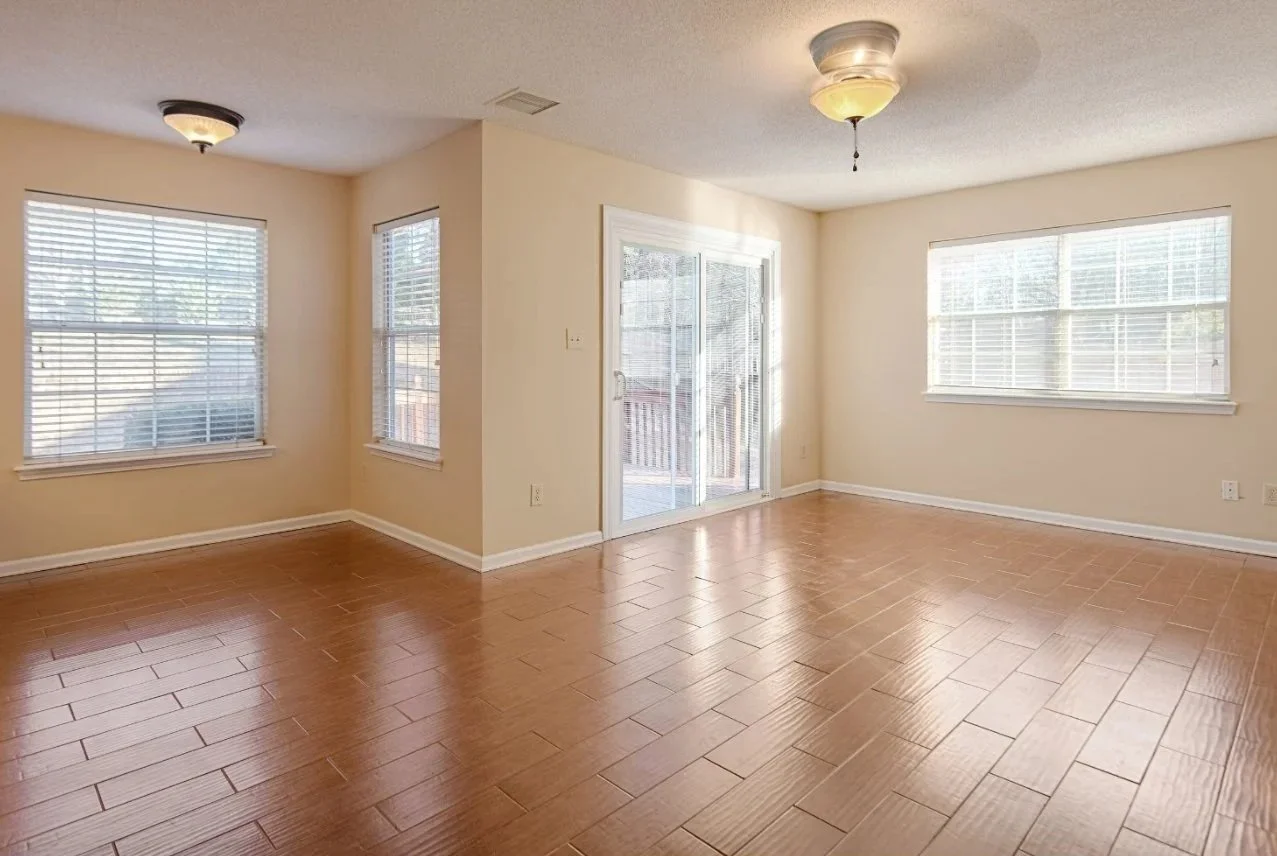
Before: Harsh glare from the window obscures the beautiful wood grain on the floor.
For about $50, this little filter screws onto your lens and solves this instantly. It cuts reflections, brings back the natural grain of the wood, and helps your images look cleaner, richer, and more professional.
What is a Circular Polarizer?
Think of a polarizer filter as polarized sunglasses for your camera lens. Just as polarized sunglasses cut the glare off the ocean or a wet road so you can see clearly, a CPL cuts the glare off floors, countertops, and windows so the camera can see the textures underneath.
It’s Not Just For Hardwood Floors
While essential for gleaming hardwood, the polarizer is an invaluable tool in a professional camera bag because it works on almost everything inside a home.
It cuts distracting reflections on:
Ceramic and porcelain tile
Granite and marble countertops
Shower glass doors
Windows (allowing you to see the view outside rather than a reflection of the room)
Basically, it works on almost any non-metallic surface.
How to Use It (The Important Twist)
Using a CPL isn't just about screwing it onto the lens. It's an active tool.
The filter has a rotating front element. As you compose your shot looking through the viewfinder or at your screen, you must slowly rotate the end of the filter. As you twist it, you will magically see the glare appear and disappear on the floor surfaces.
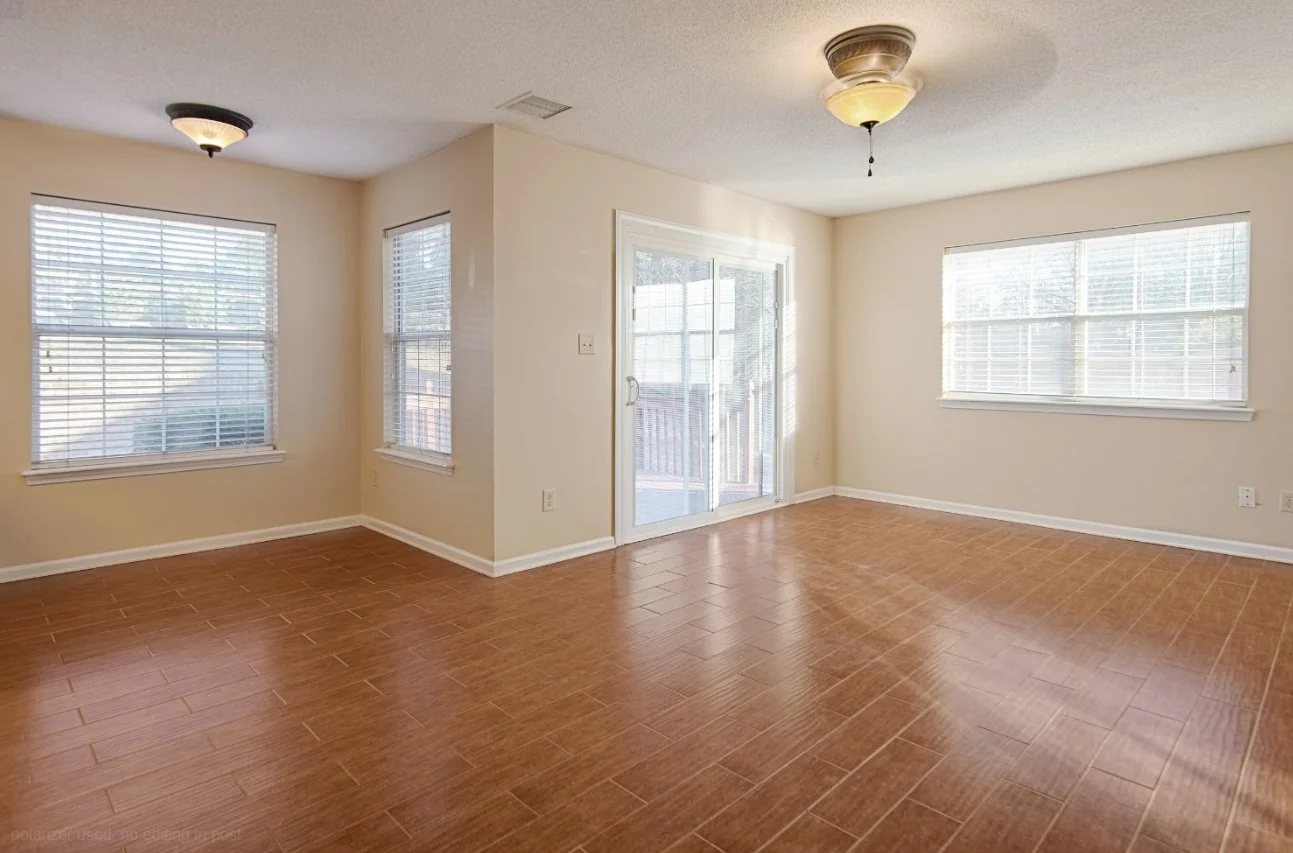
After: With the polarizer rotated correctly, the glare is gone and the floor texture is rich and clear.
You rotate the filter until the glare is minimized and the true color of the wood or tile pops through.
A Quick Warning on Light
There is one catch to using a CPL: it cuts out light.
When you attach a polarizer, you will lose anywhere from 1 to 2 "stops" of light. This means your camera is receiving less light, so you must compensate by using a slower shutter speed or a higher ISO.
For professional real estate photography, this means a tripod is absolutely essential when using a polarizer indoors to ensure sharp images at slower shutter speeds.
Getting Started
You don't need to spend a fortune, but avoid the super-cheap filters on Amazon, as they are often made of plastic and will degrade your image sharpness. Look for reputable brands that use real glass (like Hoya, Tiffen, or B+W) and ensure you get the correct millimeter size to fit your specific lens diameter.