

Charlotte’s Spring Real Estate Market in 2026: What Sellers Need to Know
Every spring the Charlotte real estate market wakes back up — and this year it's asking for a little more than before. Buyers are still out there, but they're comparing more carefully and taking their time. Here's what I'm seeing from behind the camera, and what it means for sellers heading into spring 2026.

I've been showing up to homes across the Charlotte area for a while now with a camera bag over my shoulder and a smile on my face, and every spring I feel that same shift in the air. The market starts waking up. Sellers start asking questions. Agents start calling. And buyers — they come back out, start scrolling, start comparing, start dreaming again.
This spring feels a little different though, and I think it's worth talking about.
I was watching a local news segment recently featuring Charlotte real estate agent Kate Tirigno, and something she said stuck with me. Charlotte is still strong. People are still moving here. Areas like Huntersville, Waxhaw, Union County, and Fort Mill are still getting real attention. But homes aren't selling themselves the way they were a couple years ago. Buyers are more careful now. They're comparing more. Taking a little more time before they commit.
And honestly? As a real estate photographer in Charlotte, I think that's actually a good thing — because it means the work matters again.
What I See Walking Into These Homes
I never know who's going to open the door when I knock, and that's one of my favorite parts of this job. Sometimes it's a young couple moving into their first real home. Sometimes it's a family that's been in their house for twenty years and is finally ready for the next chapter. Sometimes they follow me room to room telling me stories about the place, and I love every second of it.
What I've learned from walking into hundreds of homes across the Charlotte area is that buyers feel what a home is trying to say before they ever read the listing description. They feel it in the photos. They feel it in whether the space looks cared for or thrown together. They make up their minds faster than most sellers realize — and in 2026, they're making those decisions on a phone screen before they ever schedule a showing.
In a market where buyers are being more selective, that first impression online isn't just important. It's everything.
The Listings That Are Getting Traction Right Now

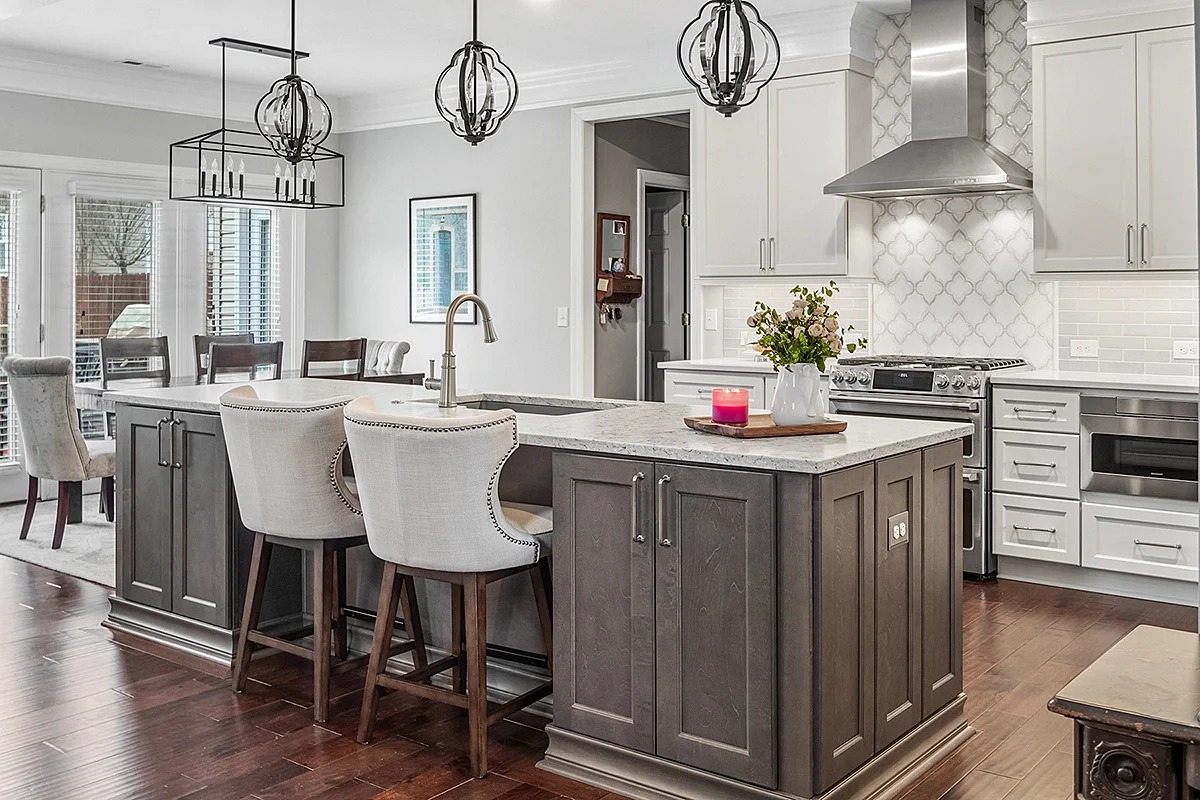
The homes I'm seeing perform well in the Charlotte market this spring share a few things in common. They're priced honestly. They're decluttered and presented with care. And they're being marketed with professional real estate photography that actually does them justice.
Not fake. Not over-filtered. Not shot on a phone at noon with every light off. Just honest, elevated work that helps a buyer understand what the space actually feels like to be in.
That's what I'm going for every single time I set up a shot. I want the home to feel like itself on its best day. small change, BIG DIFFERENCE — it's been my slogan for a reason.
What Is Rich Media, and Why Does It Matter for Your Listing?
You might be hearing the term "rich media" more lately and wondering what it actually means. Simply put, rich media is everything beyond a standard photo gallery that helps a buyer experience a home online. We're talking about things like:
Walkthrough video — a guided tour that shows how rooms connect and how the home actually flows
Drone/aerial photography — exterior shots and neighborhood context that ground-level photos can't capture
3D virtual tours — lets buyers walk through the home on their own time, from anywhere
Interactive floor plans — helps buyers understand the layout and room sizes before they visit
Virtual staging — digitally furnishing an empty or dated space so buyers can visualize it properly
None of this is about impressing anyone with gadgets. It's about answering the questions that still photos can't always answer on their own. A buyer scrolling through listings at 10pm wants to know how the layout works. They want to feel the size of the primary bedroom. They want enough confidence to actually book a showing.
That's what rich media does. And in a more competitive, buyer-careful market like Charlotte right now, listings that offer that extra clarity are standing out from the ones that don't. Here is a full blog post on Rich Media.
Charlotte Is Still a Great Place to Sell — But Presentation Matters More
The demand is still here. The growth is still here. People are still relocating to Charlotte from bigger markets, and that hasn't changed. But this market is rewarding the sellers and agents who put in the work — on the prep, on the pricing, and on the visual marketing.
Professional real estate photography in Charlotte isn't a luxury add-on anymore. It's the baseline. And rich media is quickly becoming the new standard for listings that want to compete at the top of the market.
I genuinely love getting to be part of that process. There's something really satisfying about delivering a gallery — photos, video, floor plan, all of it — and knowing the people who trusted me now have something that gives their home a real shot.
If you're a seller or listing agent preparing for the Charlotte spring market, I'd love to be part of your team. You can find my work at sixcentsmedia.com.
The $50 Secret to Professional Real Estate Photos: The Circular Polarizer
Learn the pro secret to removing glare from hardwood floors and windows in real estate photography using a simple, affordable circular polarizer filter. See before and after examples.
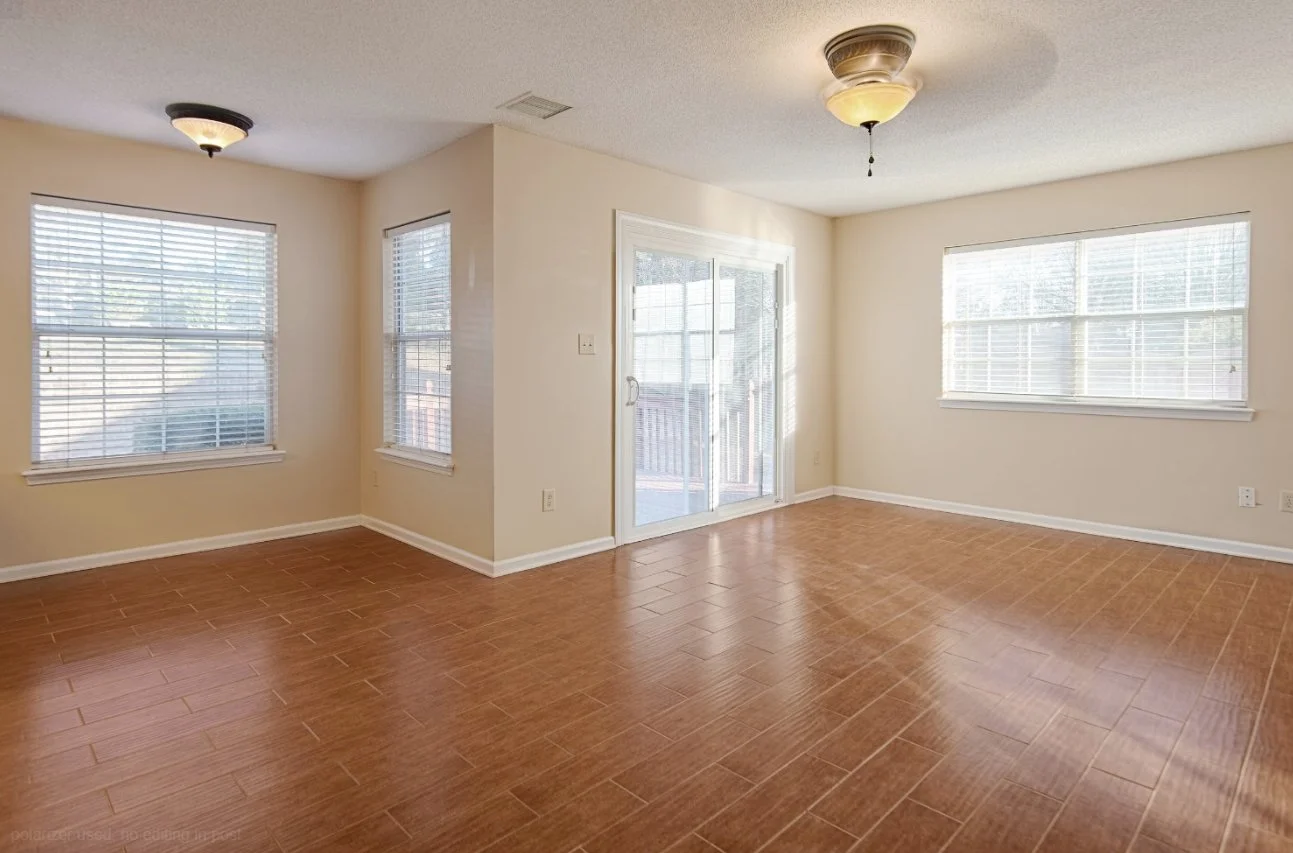
The single best way to reduce harsh glare on reflective surfaces like hardwood floors and windows in real estate photography is by using a simple, affordable tool called a Circular Polarizer (CPL) Filter. This lens filter works by cutting out polarized light reflections, instantly revealing the wood grain and textures beneath the surface without requiring complex editing.
If you’ve photographed real estate in Charlotte for any length of time, you know the struggle: beautiful hardwood floors that act like giant mirrors. Instead of showing rich color and texture, they bounce light straight back into the camera—creating those bright, blown-out white spots that ruin a shot.
Once you notice these blown-out spots, you can't unsee them. And the worst part? They instantly make the photo feel amateur. A stunning, expensive floor can end up looking cheap, flat, and distracting.
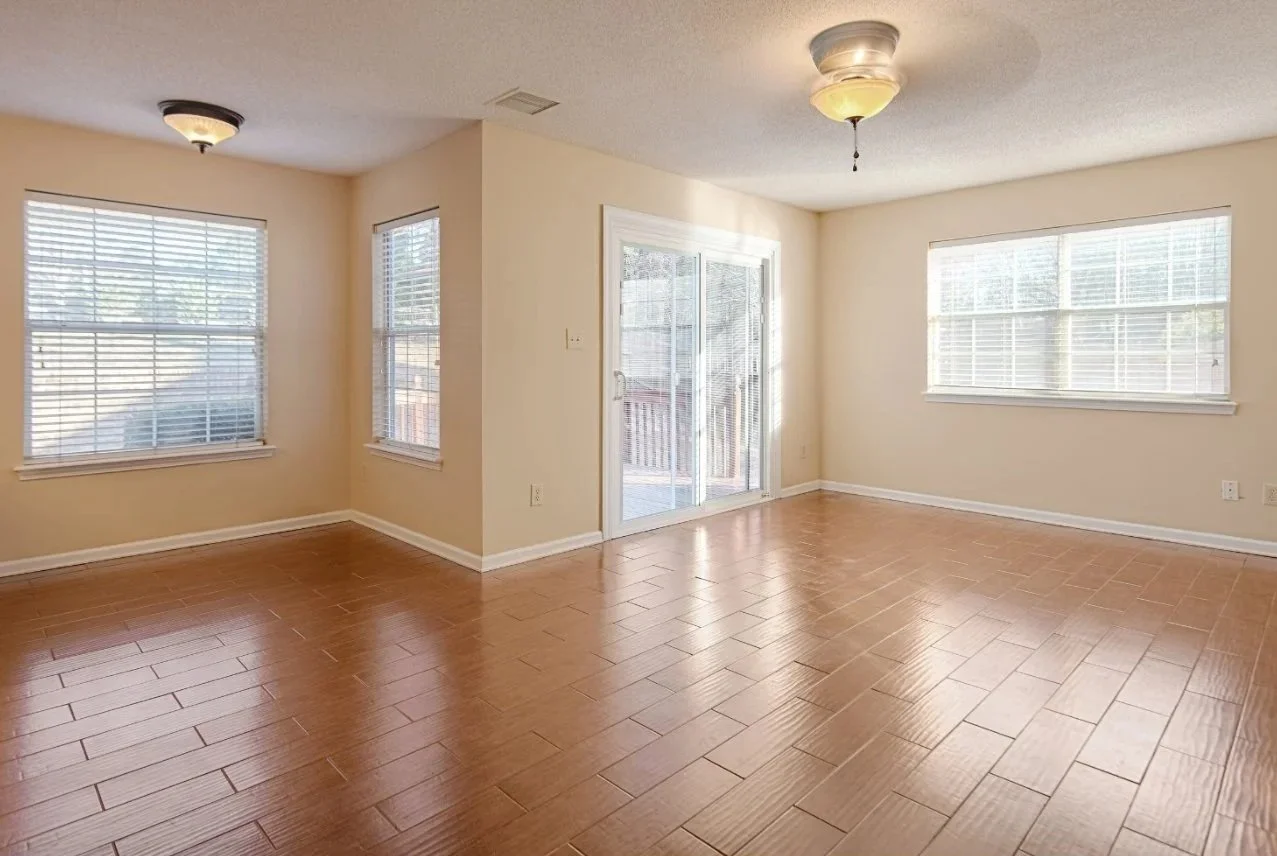
Before: Harsh glare from the window obscures the beautiful wood grain on the floor.
For about $50, this little filter screws onto your lens and solves this instantly. It cuts reflections, brings back the natural grain of the wood, and helps your images look cleaner, richer, and more professional.
What is a Circular Polarizer?
Think of a polarizer filter as polarized sunglasses for your camera lens. Just as polarized sunglasses cut the glare off the ocean or a wet road so you can see clearly, a CPL cuts the glare off floors, countertops, and windows so the camera can see the textures underneath.
It’s Not Just For Hardwood Floors
While essential for gleaming hardwood, the polarizer is an invaluable tool in a professional camera bag because it works on almost everything inside a home.
It cuts distracting reflections on:
Ceramic and porcelain tile
Granite and marble countertops
Shower glass doors
Windows (allowing you to see the view outside rather than a reflection of the room)
Basically, it works on almost any non-metallic surface.
How to Use It (The Important Twist)
Using a CPL isn't just about screwing it onto the lens. It's an active tool.
The filter has a rotating front element. As you compose your shot looking through the viewfinder or at your screen, you must slowly rotate the end of the filter. As you twist it, you will magically see the glare appear and disappear on the floor surfaces.
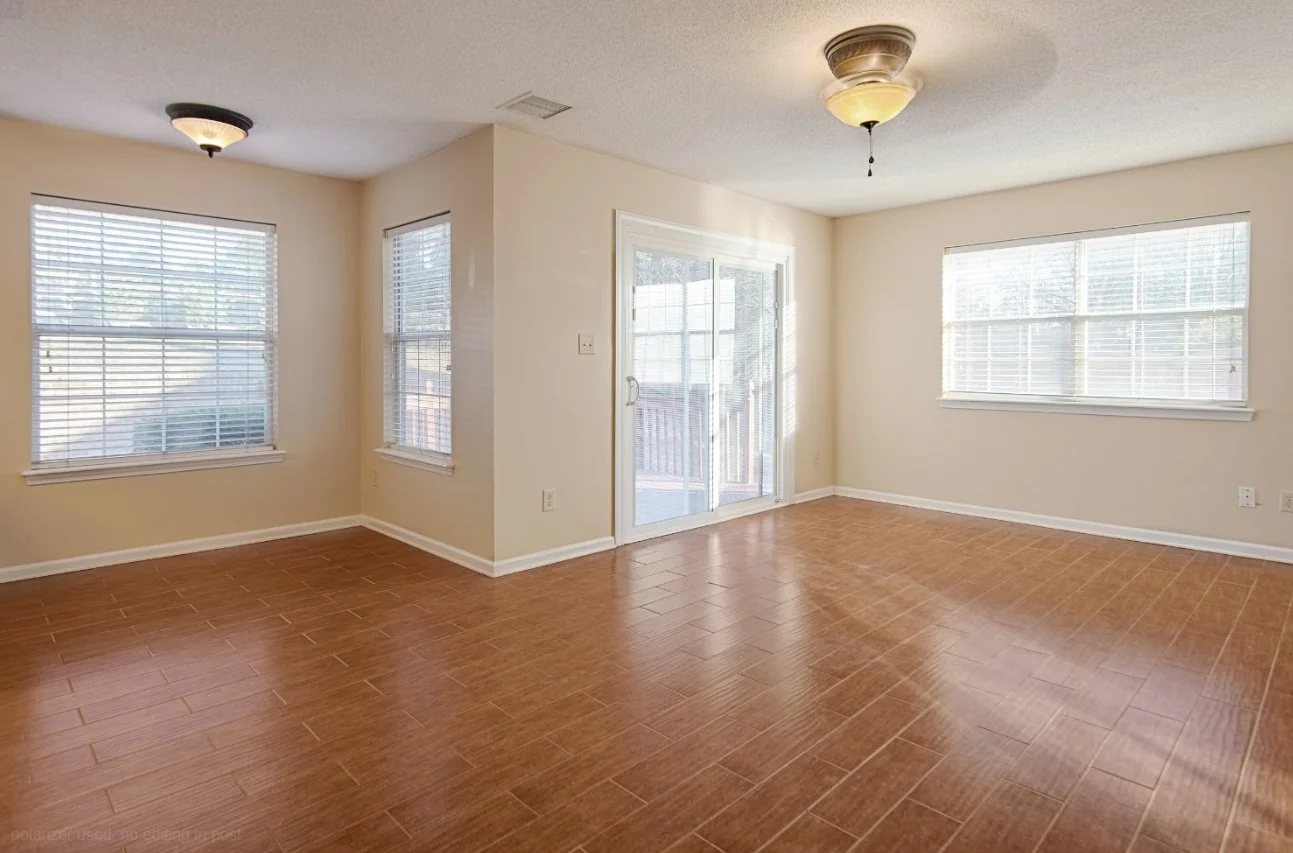
After: With the polarizer rotated correctly, the glare is gone and the floor texture is rich and clear.
You rotate the filter until the glare is minimized and the true color of the wood or tile pops through.
A Quick Warning on Light
There is one catch to using a CPL: it cuts out light.
When you attach a polarizer, you will lose anywhere from 1 to 2 "stops" of light. This means your camera is receiving less light, so you must compensate by using a slower shutter speed or a higher ISO.
For professional real estate photography, this means a tripod is absolutely essential when using a polarizer indoors to ensure sharp images at slower shutter speeds.
Getting Started
You don't need to spend a fortune, but avoid the super-cheap filters on Amazon, as they are often made of plastic and will degrade your image sharpness. Look for reputable brands that use real glass (like Hoya, Tiffen, or B+W) and ensure you get the correct millimeter size to fit your specific lens diameter.